She Sets the Frame: Nine Asian Women Directors Defining the Moment
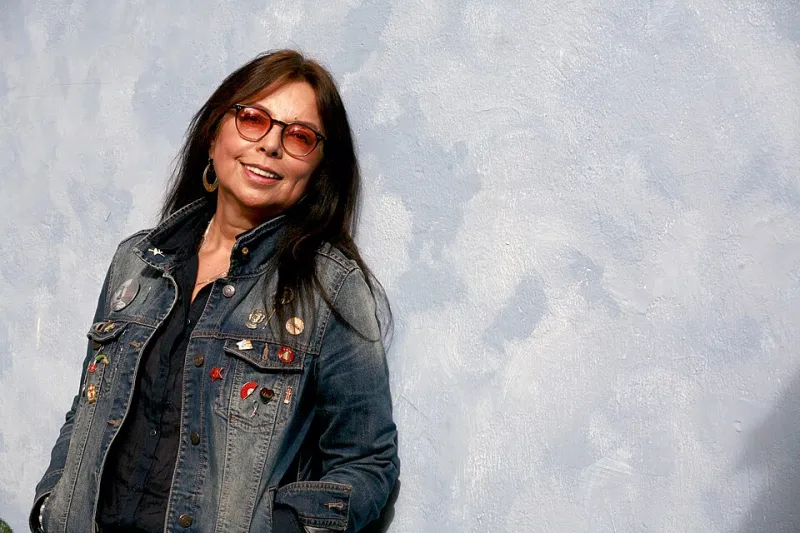
Photo: TostaoFito, CC BY-SA 4.0, via Wikimedia Commons
For decades, the story of Asian women in cinema was written mostly in the margins: the actress who carried a male director's masterpiece, the editor who saved a cut, the producer who found the money. The directors were there too — Ann Hui, Sylvia Chang, Mira Nair, Deepa Mehta — but the industry treated them as exceptions rather than a lineage.
That framing has finally collapsed. What's happening now is not a handful of breakthroughs but a generation, working across animation and documentary and genre film and quiet domestic drama, and increasingly finding American audiences who are not treating subtitles as a barrier.
Here are nine filmmakers whose next moves are worth tracking this year, and the film to start with for each.
Celine Song
The Korean-Canadian playwright turned director made the most quietly devastating debut of the decade with Past Lives (2023), a film about the person you didn't marry that somehow refuses to be cruel to anyone in the room. Her follow-up, Materialists (2025), traded the ache for a sharper, funnier New York comedy of manners.
Start with: Past Lives. If you've already seen it, watch it again with the sound off for ten minutes and notice how much she trusts faces.
Chloé Zhao
Born in Beijing, trained in Massachusetts, Zhao spent years making small, humane films about people on the American margins before Nomadland (2020) made her the second woman ever to win the Best Director Oscar. She has since moved between studio scale and literary adaptation — her Hamnet arrived in late 2025 — without ever losing the documentary patience that made her name.
Start with: The Rider (2017), still her most emotionally direct film.
Lulu Wang
The Beijing-born, US-raised writer-director broke through with The Farewell (2019), a family comedy about a lie told out of love that played like a documentary and hit like a truck. Her series Expats (2024) expanded the canvas to Hong Kong and proved she can sustain tension across hours rather than minutes.
Start with: The Farewell. It is the single best gateway film on this list for a skeptical viewer.
Naoko Yamada
No one working in animation right now is better at the tiny gesture — a hand hovering, a shoe scuffing a stair, hair catching light — than Yamada. After defining an era at Kyoto Animation with A Silent Voice (2016) and Liz and the Blue Bird (2018), she moved to Science SARU and made The Colors Within (2024), a film about music and synesthesia that treats teenage interiority with utter seriousness.
Start with: Liz and the Blue Bird, eighty-some minutes of pure emotional precision.
Kim Bora
House of Hummingbird (2018) arrived almost fully formed: a 1994-set portrait of a fourteen-year-old girl in Seoul, drifting through family indifference and one good teacher. It won prizes everywhere and then, frustratingly, took years to be followed up. Kim remains one of the most distinctive voices in Korean cinema precisely because she refuses to hurry.
Start with: House of Hummingbird. Bring tissues, and patience for a slow first act that pays off enormously.
Yim Soon-rye
One of Korea's most underappreciated veterans, Yim has been working since the 1990s and can move from handball drama (Forever the Moment, 2008) to the gentlest food-and-healing film ever made about a city woman relocating to the countryside (Little Forest, 2018) to a tense espionage thriller (The Point Men, 2023) without repeating herself.
Start with: Little Forest — the perfect thing for a cold January night.
Rima Das
Working largely outside the Indian studio system and often shooting her own films with a tiny crew in Assam, Das makes movies that feel discovered rather than manufactured. Village Rockstars (2017) follows a young girl who wants to be a guitarist, and it has more life in any five-minute stretch than most films manage in two hours.
Start with: Village Rockstars, then Tora's Husband (2022) for a much darker, funnier view of the same world.
Zoya Akhtar
Bollywood's most commercially fluent director with something on her mind, Akhtar makes glossy, joyful films that are quietly about class. Gully Boy (2019) took Indian hip-hop mainstream and gave the country one of its best-loved movies; The Archies (2023) was a strange, charming swing at reinventing a comic-book property for a streaming audience.
Start with: Gully Boy. Turn the subtitles on, turn the volume up.
Anocha Suwichakornpong
The most formally adventurous filmmaker on this list, working out of Thailand with the production company she co-founded to support independent voices in the region. By the Time It Gets Dark (2016) folds memory, history, and filmmaking itself into a puzzle box that never feels like homework; Come Here (2021) pushes even further into the experimental.
Start with: By the Time It Gets Dark, ideally on a big screen with a good sound system.
Also Worth Your Time
Keep an eye on Vietnam's Ash Mayfair, whose The Third Wife (2018) was one of the most striking debuts of its year, and on Vivian Qu, whose Angels Wear White (2017) remains an essential, unsparing piece of Chinese independent cinema. Neither has settled into a predictable rhythm yet, which is exactly why they're interesting.
The common thread across all of these filmmakers is not a style. It's a refusal to explain. These are films that assume you can meet them halfway — and increasingly, American audiences can.