The Map Is Bigger Than Two Cities: Unlocking Asian Cinema Beyond Tokyo and Seoul
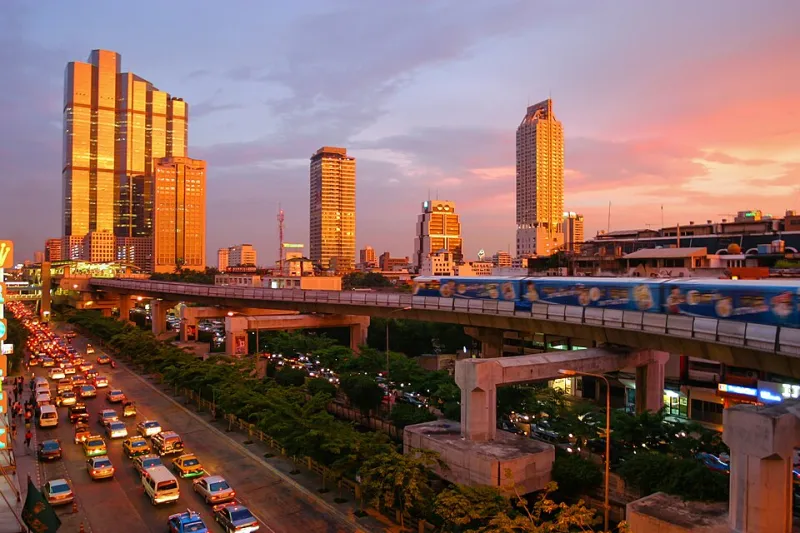
Photo: User:Diliff, CC BY-SA 3.0, via Wikimedia Commons
Here's a small experiment. Open your watchlist and count the Asian films on it. Now count how many come from Japan, South Korea, or the Hong Kong–Taiwan corridor. For most American viewers, those two numbers turn out to be the same number.
That's not a taste problem. It's a distribution problem. The films from Bangkok, Jakarta, Hanoi, Manila, and Kuala Lumpur exist, get made every year, win prizes, and fill theaters in their home regions — they just don't get the shelf space, the poster art, or the algorithm push that a Seoul thriller does. So we keep walking through the same three doors and assuming the hallway ends there.
It doesn't. Here's the rest of the map, plus a place to start.
Why Your Queue Keeps Landing in the Same Two Places
Three forces do most of the work. First, acquisitions: a buyer pitching a Korean genre film to a US streamer has an easier meeting than a buyer pitching a Filipino family comedy, because the first one has a track record the spreadsheet understands. Second, marketing budgets — a title out of Thailand rarely gets billboards in Los Angeles, so word of mouth has to do the job a campaign normally would. Third, the recommendation loop, which is very good at reinforcing what you already watched and very bad at suggesting a Malaysian body-horror debut.
Then there's the labeling problem. "Asian cinema" as a category flattens roughly a dozen distinct industries, languages, and comic traditions into one shelf. Once you start treating them as separate national cinemas, the whole thing opens up.
Thailand: The Crowd-Pleaser With a Weird Streak
Thai commercial cinema is probably the most underrated export on this list, because it's built for exactly the thing American audiences claim to want: high-concept, tightly paced, emotionally direct. Nattawut Poonpiriya's Bad Genius (2017) turns exam cheating into a heist film with a pulse. How to Make Millions Before Grandma Dies (2024) became a genuine regional phenomenon on the strength of a family tearjerker that earns every one of its tears. And Hunger (2023) is a culinary drama that plays like a thriller about class and ambition.
On the art side, Apichatpong Weerasethakul is the country's most famous export — Uncle Boonmee Who Can Recall His Past Lives (2010) and Cemetery of Splendour (2015) reward patience. And if you want folk horror with teeth, The Medium (2021) is the door.
Indonesia: Action With a Bad Mood
The international story about Indonesian cinema usually begins and ends with The Raid (2011), which is a little like summarizing American film by way of one very good car chase. Gareth Evans' film did launch a wave, though, and the people who made it kept working: Timo Tjahjanto's The Night Comes for Us (2018) and Headshot (2016) are brutal, inventive, and lean. Joko Anwar's Impetigore (2019) and Satan's Slaves franchise gave the country a horror engine of its own.
But the interesting stuff runs wider. Mouly Surya's Marlina the Murderer in Four Acts (2017) is a western with a widow at the center and a score that won't leave your head. Makbul Mubarak's Autobiography (2022) is a slow-burn study of power and complicity that plays like a thriller without ever raising its voice.
Vietnam: Slow Cinema and Sudden Speed
Vietnam is quietly having one of the most interesting decades in the region. Pham Thien An's Inside the Yellow Cocoon Shell (2023) took the Camera d'Or at Cannes — it's a long, luminous, drifting film about a young man escorting his sister-in-law's body home, and it's the kind of movie that makes you forget you're reading subtitles. Tran Anh Hung, who has been working since the early 1990s with The Scent of Green Papaya, returned with The Taste of Things (2023), a French production with a Vietnamese filmmaker's fingerprints all over it.
Then there's the other lane: Le Van Kiet's Furie (2019) is a straight-up action movie about a mother hunting kidnappers, and it moves like a much more expensive film. Dreamy Eyes (2019) was a domestic blockbuster romance that never got a fair shake in the States.
The Philippines: A Whole Archipelago of Tones
Filipino cinema might have the widest range of any industry on this list, and the least international attention relative to its output. Lav Diaz makes films that run three, four, eight hours — The Woman Who Left (2016) is the accessible entry point. Erik Matti's On the Job (2013) is a gritty crime thriller that Hollywood remade and didn't improve. Martika Ramirez Escobar's Leonor Will Never Die (2022) is a joyful, formally bizarre meta-comedy about an aging screenwriter. And Patay na si Hesus (2016) is a road-trip family comedy that would play beautifully in any American art house if anyone bothered to book it.
The pipeline here is real, too: the Cinemalaya festival has been launching first features for two decades.
Malaysia: Small Industry, Big Nerve
Malaysia punches well above its funding. Abang Adik (2023) follows two undocumented brothers in Kuala Lumpur and hits harder than most prestige dramas with ten times the budget. Amanda Nell Eu's Tiger Stripes (2023) is a puberty body-horror film that announced a major new voice. And for a deep cut: Tsai Ming-liang, one of the defining art-house directors of the past thirty years, was born in Kuching before building his career in Taiwan.
Your 2026 Watchlist
Eight titles, eight different moods — start wherever your taste actually lives:
- Bad Genius (Thailand, 2017) — if you want momentum.
- Marlina the Murderer in Four Acts (Indonesia, 2017) — if you want style.
- Inside the Yellow Cocoon Shell (Vietnam, 2023) — if you want to be hypnotized.
- On the Job (Philippines, 2013) — if you want grit.
- Abang Adik (Malaysia, 2023) — if you want to cry on a Tuesday.
- Impetigore (Indonesia, 2019) — if you want to sleep with the lights on.
- How to Make Millions Before Grandma Dies (Thailand, 2024) — if you want the whole family in the room.
- Leonor Will Never Die (Philippines, 2022) — if you want to remember why you love movies.
How to Actually Find These Movies
Check JustWatch before you assume something is unavailable — catalogs rotate constantly. The Criterion Channel and MUBI both carry Southeast Asian titles in rotation, and Kanopy, free through most US public libraries, has a surprisingly deep international shelf. Regional festivals do the curation for you: the New York Asian Film Festival, Seattle's Tasveer, and Los Angeles' various Asian showcases all program exactly this material, and several now offer virtual screenings.
The point isn't to abandon Tokyo and Seoul. It's to stop treating them as the whole continent. There's a lot more map left, and most of it is one search box away.