What You're Actually Losing When Asian Films Get Dubbed Into English
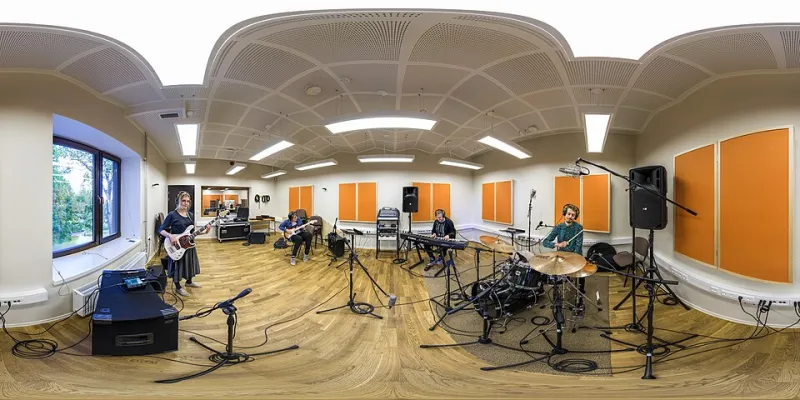
Photo: Lauri Veerde, CC BY-SA 4.0, via Wikimedia Commons
There's a moment in Park Chan-wook's Oldboy where the main character delivers a line that, in Korean, lands somewhere between a confession and a threat. The syllables feel jagged and exhausted at the same time. Watch the English dub and the same line reads as just... angry. The nuance evaporates. The performance shrinks.
This isn't a knock on voice actors, who are genuinely skilled professionals. It's a structural problem — one that's been quietly reshaping how American audiences relate to Asian cinema, even as streaming platforms push more of it onto our screens than ever before.
The Dub Was Never Really About You
Here's something the entertainment industry doesn't advertise: dubbing was historically a cost-cutting and distribution strategy, not a viewer-first service. When studios licensed Asian films for Western markets in the 1980s and 90s, dubbing was cheaper than educating audiences about subtitles. It also made films easier to sell to broadcasters who worried about viewer drop-off.
The result was a generation of American moviegoers who associated foreign-language films with poorly synced lips and flat vocal performances — a reputation largely built on bad dubs, not bad filmmaking.
Asian markets, meanwhile, developed a completely different relationship with dubbing. In Japan, for instance, dubbing culture around imported Western content is meticulous and prestigious. Major Japanese studios assign A-list voice talent to dub American blockbusters, and audiences treat those performances as legitimate artistic contributions. The craft is taken seriously.
But here's the irony: Japanese filmmakers almost universally prefer their own films to be seen with original audio. The gap between how seriously Asian markets treat dubbing into their languages versus how carelessly Western distributors have historically dubbed out of them is enormous.
What Sound Designers Actually Build Into a Film
To understand what gets lost, you have to understand what's actually there in the first place.
When a Korean or Japanese or Thai director works with their sound team, the audio landscape of a film is constructed with the same intentionality as the visual one. Tonal languages like Mandarin and Thai carry meaning in pitch — a single syllable can shift its entire definition based on how it rises or falls. Emotion in Korean is often embedded in the texture of speech: the roughness, the breath, the deliberate trailing off. These aren't just performance choices. They're linguistic architecture.
A skilled sound designer building a mix for an Asian film is working with that architecture as a foundation. The music is scored around it. The ambient sound is layered beneath it. The silence — and Asian cinema uses silence with remarkable precision — is calibrated against it.
When you drop an English dub on top of that structure, you're not translating. You're remodeling. The new voice doesn't sit in the same acoustic space as the original. It doesn't breathe the same way. And because English is not a tonal language, entire registers of meaning simply have no equivalent vessel.
The Subtitle Shift Nobody Saw Coming
For years, the conventional wisdom in Hollywood was that American audiences wouldn't tolerate reading while watching. Subtitles were considered a barrier — something that kept foreign films in the art house ghetto and out of the multiplex.
Then Parasite won Best Picture. Then Squid Game became the most-watched Netflix series in history. Then a few million people discovered that reading subtitles for two hours was, in fact, completely fine.
Streaming data is quietly telling a different story than the old theatrical model ever could. Viewers who start an Asian film with subtitles have strong completion rates. They rewatch. They recommend. The subtitle "problem" turns out to have been a familiarity problem — one that a decade of streaming has largely dissolved.
This is forcing some genuine reconsideration inside studios and licensing departments. If audiences will watch subtitled content at scale, the economic argument for dubbing — always the primary argument — starts to weaken. Dubbing a feature film costs real money. Good dubbing costs a lot of real money. If the audience doesn't need it and the original is demonstrably better, the math changes.
The Anime Exception (And What It Actually Proves)
Anime is the complicating factor in every conversation about dubbing and Asian content. English dubs of anime have gotten genuinely excellent over the past two decades. Studios like Funimation and Crunchyroll have invested heavily in voice talent and localization, and plenty of anime fans will argue — with some justification — that certain English dubs match or complement the original Japanese tracks.
But anime is a specific case, not a template. The genre has a long US fanbase that grew up with dubs, creating both a market and a tradition of investment in the craft. Live-action Asian cinema doesn't have that same infrastructure or that same cultural runway.
What anime actually proves is that dubbing can be done well when studios treat it as an artistic endeavor rather than a checkbox. The problem is that most live-action dubbing doesn't get that treatment. It gets a budget and a deadline.
What Filmmakers Actually Want
This part tends to get glossed over: most Asian directors have a clear preference about how their films are heard, and it's rarely "please dub this."
Bong Joon-ho famously described the subtitle barrier as "a one-inch tall hurdle" in his Golden Globes speech for Parasite. The framing was diplomatic, but the implication was pointed. The original language is the film. Everything else is an approximation.
When streaming platforms give viewers the choice — and increasingly they do — the original language track is often the one that gets selected by the kind of viewer who becomes a genuine fan of Asian cinema. That viewer tells their friends. That viewer subscribes to services like Asia Movie Pass specifically because they want the real thing, not the English-language approximation of it.
The Bigger Picture
The dubbing debate isn't really about audio preferences. It's about what we think a film actually is.
If a film is just its plot and images, then a dub is a reasonable shortcut. But if a film is a complete sensory and artistic experience — and the best Asian cinema absolutely is — then the original language track isn't optional. It's foundational.
Hollywood's long reliance on dubbing as a default reflects a specific assumption: that American audiences needed to be protected from the foreignness of foreign films. That assumption is aging out fast. A generation of viewers raised on streaming has demonstrated, pretty conclusively, that they're capable of meeting a film on its own terms.
The dubbing wars aren't over. But the side that assumed audiences needed English to engage with Asian cinema is losing ground, one subtitle at a time.