No Diagnosis Required: How Asian Films Understand Your Mind Better Than You Do
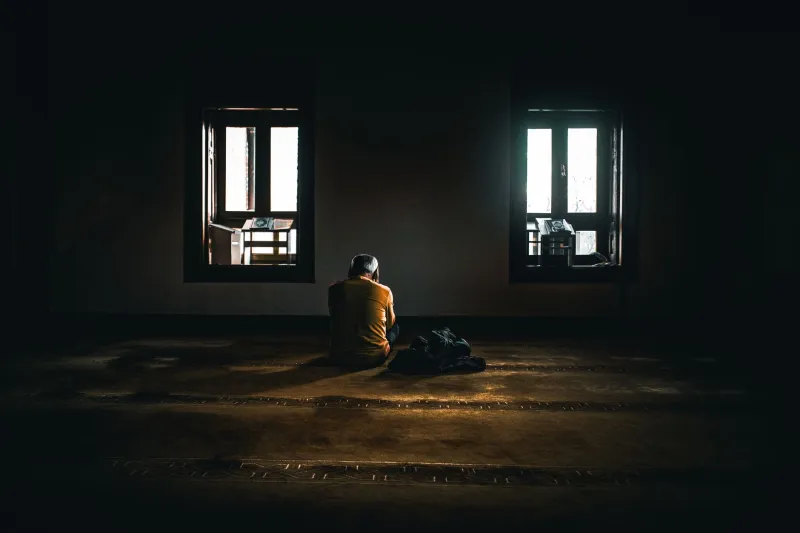
There's a scene in Lee Chang-dong's Burning where the main character stands in his apartment doing absolutely nothing. No music. No voiceover explaining what he's feeling. Just a guy in a room, and the particular way the light falls across his face. If you've ever experienced the specific numbness of depression — not the dramatic, movie-poster kind, but the gray, static, Tuesday-afternoon kind — that scene will reach inside your chest and squeeze something you didn't know was still tender.
Lee never tells you his character is depressed. Nobody in the film uses that word. And somehow, that's exactly why it works.
Asian cinema has developed a quietly radical approach to mental health on screen. Where Hollywood tends to name conditions, assign symptoms, and move characters through recognizable treatment arcs, filmmakers across Japan, South Korea, Taiwan, and China have built a visual language for psychological suffering that operates almost entirely below the surface. The result is something American audiences are increasingly recognizing as more emotionally honest than anything they've seen in a prestige drama with a named disorder and a therapy montage.
The Room Knows What the Character Won't Say
One of the most consistent tools in Asian cinema's psychological toolkit is the environment as emotional mirror — what film scholars call mise-en-scène, though you don't need the term to feel its effects. Watch how spaces are used in films like Hirokazu Kore-eda's Nobody Knows or Jia Zhangke's Still Life. Cluttered rooms, broken appliances, a single wilting plant on a windowsill — these aren't set dressing. They're psychological portraits.
In A Tale of Two Sisters, the Korean horror film that's really a grief story wearing a scary mask, the house itself behaves like a traumatized mind — full of locked doors, strange repetitions, and rooms that don't quite make sense spatially. Director Kim Jee-woon never pauses to explain that his protagonist is dissociating. He just builds a house that dissociates.
American films, by contrast, often treat the environment as neutral backdrop. The psychological weight is carried by dialogue: a character tells another character how they're feeling, or a doctor delivers exposition disguised as compassion. It's efficient storytelling. It's also, for a lot of viewers, slightly hollow — because that's not how internal suffering actually communicates itself in daily life.
Performance as Interior Monologue
Another dimension of this approach lives in the acting itself. Asian cinema frequently rewards performers who can convey psychological complexity through restraint — through what they don't do as much as what they do.
Take Tang Wei's performance in Still Life or Maggie Cheung in In the Mood for Love. There are entire emotional universes being communicated through posture, through the way a character holds a cup, through a fraction of a second's hesitation before answering a simple question. These performances require audiences to do interpretive work, to lean in, to participate in the meaning-making. And that participation — that act of recognizing something in a character's behavior — is itself therapeutic. You're not being told what grief looks like. You're discovering that you already know.
This is partly cultural. Many East and Southeast Asian storytelling traditions have historically valued indirection, the communicated subtext, the thing that goes unsaid but understood. But it's also a deliberate artistic choice that filmmakers are making with full awareness of its psychological effect on viewers.
When the Camera Becomes the Therapist
Directors like Wong Kar-wai and Hou Hsiao-hsien use camera movement — or the deliberate absence of it — to replicate psychological states with startling precision. Wong's handheld, slightly blurred frames in Chungking Express don't just look like loneliness; they create a physical sensation of it in the viewer. Hou's long, static shots in Millennium Mambo put you inside a kind of dissociative drift that no amount of dialogue could achieve.
For American viewers, particularly those who've experienced anxiety, depression, grief, or trauma, these techniques often produce a response that's less "that's interesting filmmaking" and more "how did they know?"
That's the accidental therapy part. These films weren't made to be mental health resources. But they function as one because they validate psychological experience without pathologizing it. They show you a person suffering — really, specifically, recognizably suffering — and they don't rush to fix it, explain it, or assign it a name. They just sit with it. Which is, it turns out, what a lot of people desperately need someone to do.
Why "Saying the Words" Sometimes Says Less
Hollywood has gotten better at mental health representation in recent years. Films and TV shows now include depression, OCD, PTSD, and bipolar disorder with more frequency and more care than they did a decade ago. That visibility matters. But there's a difference between representation and resonance.
When a character says "I have anxiety" or a film structures its third act around a diagnosis, it creates a kind of categorical clarity that can actually distance viewers whose experience doesn't fit the clinical box. Mental health, for most people, is messier and more ambiguous than a named condition. It's the weird way you've been eating lately. The texts you haven't answered. The fact that you cried during a commercial and couldn't explain why.
Asian cinema, by working in that ambiguous space, captures something that diagnostic language sometimes can't: the experience of not quite knowing what's wrong with you, only that something is. Films like Shoplifters, Parasite, or Yi Yi portray characters in various states of psychological distress without ever suggesting those characters have a clear understanding of their own inner lives. That uncertainty feels real in a way that a clean narrative arc around a named disorder often doesn't.
What This Means for How You Watch
If you're new to Asian cinema, or if you've been watching but not quite sure why certain films hit differently than their Hollywood counterparts, the mental health dimension is worth paying attention to. It changes how you engage with performance, with space, with silence.
Start with Burning if you want something that captures masculine depression and social alienation without a single word of explanation. Try A Brighter Summer Day for grief and identity dissolution rendered in four hours of extraordinary patience. Watch House of Flying Daggers not as a martial arts film but as a study in obsession and self-destruction dressed in gorgeous silk.
Or start anywhere. The point isn't to build a curriculum. It's to recognize that when a film makes you feel genuinely seen — when something on screen names an experience you've never heard named before — that's not an accident. That's craft. That's a filmmaker who understood that sometimes the most honest thing you can do is show the thing without explaining it.
Asia Movie Pass exists because that kind of filmmaking deserves more than a niche audience. It deserves to be on your couch, on a Tuesday night, doing exactly what the best therapy does: reminding you that what you're feeling has been felt before, and that it's worth paying attention to.